
The current math on San Diego renovation returns — which projects repay their cost at resale, what they run in the Pacific region, and the California rulebook for hiring the contractor who builds them.
Every renovation conversation in San Diego eventually arrives at the same question: how much of this comes back at resale? The honest answer is more interesting than the folklore. The projects that return the most here are rarely the ones that photograph best, and the ones that photograph best rarely return the most. What follows is the current math — drawn from the industry's standard benchmark and from California's own consumer-protection rulebook — for owners deciding what to build, what to skip, and who to trust with the keys.
What actually returns at resale here
The benchmark worth knowing is the Cost vs. Value Report, published annually by Zonda. The 2025 edition — the report's 38th — compares average job costs against resale value for 28 common projects, and its Pacific region tables (the report's grouping that includes California) are the closest published read on our market. Two findings frame everything else: nationally, eight of the ten best-returning projects are exterior replacements, and the Pacific posted among the strongest overall returns of any region in the country.
The Pacific region leaders, per the 2025 report:
- Garage door replacement — $4,604 job cost, $12,063 in resale value: 262% recouped
- Manufactured stone veneer — $13,180 job cost, $30,538 in resale value: 231.7% recouped
- Steel entry door replacement — $2,545 job cost, $5,228 in resale value: 205.4% recouped
- Fiber-cement siding replacement — $22,555 job cost, $29,422 in resale value: 130.4% recouped
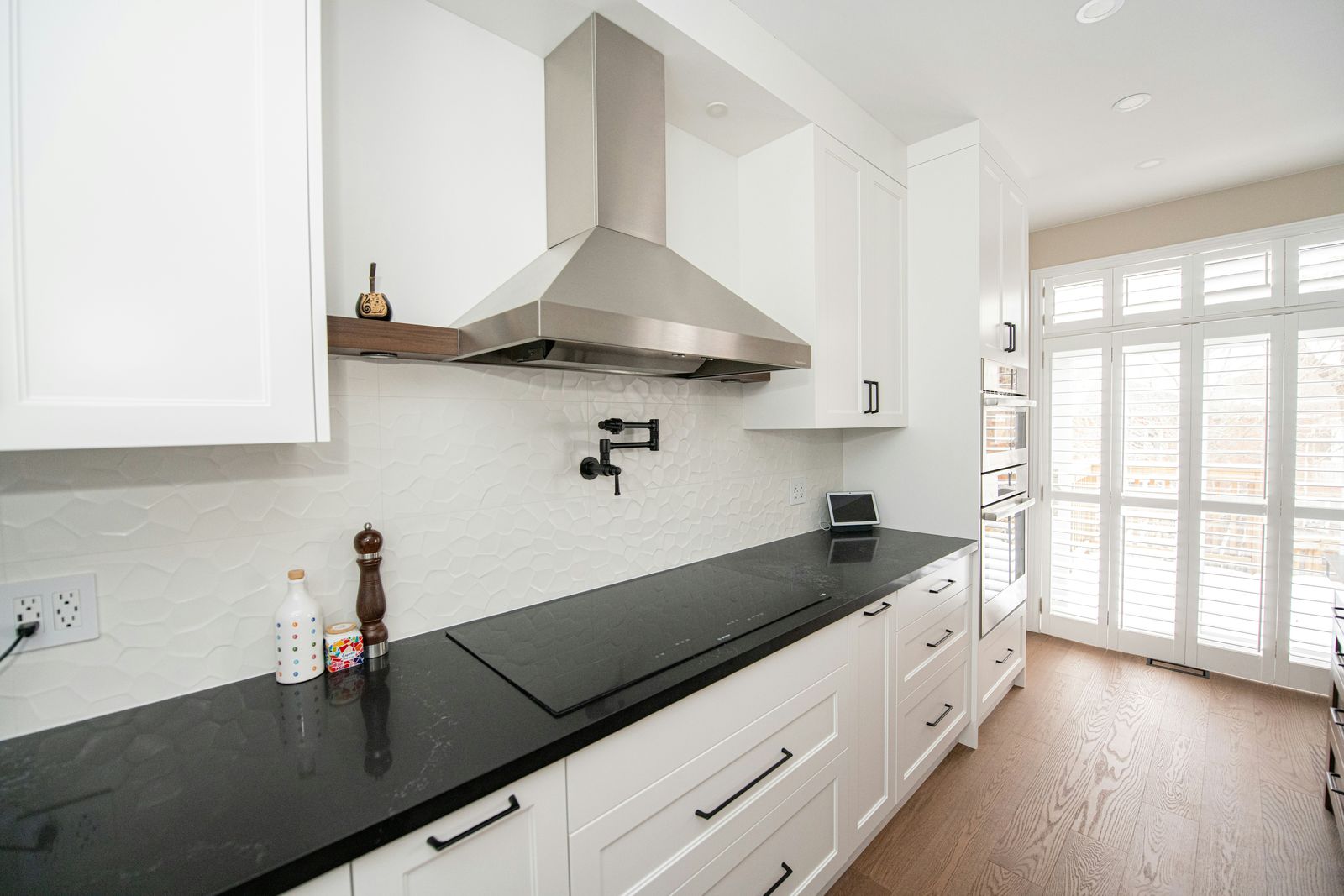
- Minor kitchen remodel (midrange) — $29,728 job cost, $38,384 in resale value: 129.1% recouped
- Wood deck addition — $18,405 job cost, $18,874 in resale value: 102.5% recouped
Now the other half of the ledger, same report, same region: a midrange major kitchen remodel recoups 57.2 percent. The upscale version recoups 38.8 percent. An upscale bath returns 44.5 percent, and an upscale primary suite addition just 18.6 percent. The pattern is unambiguous. Modest exterior work and right-sized updates more than pay for themselves; large discretionary remodels return a fraction of their cost. The market rewards a house that presents beautifully and functions properly — it declines to reimburse taste.
San Diego sharpens the logic rather than bending it. Marine air is patient and unkind to exterior surfaces, so a crisp garage door, a sound entry, fresh siding — these read instantly as a maintained house rather than a pending project. And in a market where the patio is treated as a room, it is no accident that a wood deck clears 100 percent in the Pacific tables while falling short of it nationally. Here, the exterior is not the wrapper. It is the first showing.
The San Diego cost reality
The same report explains why budgets here feel heavier than the national conversation suggests: Pacific job costs run above the national line on most projects — that minor kitchen at $29,728 against $28,458 nationally, stone veneer at $13,180 against $11,702, an asphalt roof at $36,391 against $31,871. Skilled labor and materials in coastal California command a premium, and honest bids reflect it.
Process adds its own line items. In the City of San Diego, additions and remodels require a building permit through Development Services' online portal, with review timelines that belong in your schedule rather than your footnotes. Inside the Coastal Overlay Zone, the rules deepen: many improvements to existing homes are exempt from a Coastal Development Permit, but proximity to a beach, wetland, or bluff edge changes the answer, and a remodel that removes 50 percent or more of the exterior walls is treated as new coastal development — permit required. A voter-enacted 30-foot height limit also governs much of the city's coastal zone. None of this is a reason not to build; all of it is a reason to scope before you design. Layer in HOA or design-review approvals where they apply, and the prudent assumption is that approvals may take as long as the construction they precede.
Renovating to sell vs. renovating to live
These are two different ledgers, and conflating them is the most expensive mistake owners make.
Renovating to sell is a punch-list exercise, not a transformation. The goal is to remove the deductions — the items an inspection or a first impression would price against you — and let the comp set do the rest. Doors, paint, lighting, landscape, the honest repair of what is worn: this is where the 200-percent category lives. What rarely belongs on a pre-sale list is the gut remodel, because the comp set is a ceiling, and money spent pushing past it sells at the 40-cent dollar the report describes. If the kitchen is dated but sound, presentation is usually the better instrument — staging in particular borrows much of a remodel's effect for a fraction of its cost, a case we make in detail in The Power of Staging.
Renovating to live runs on different arithmetic. A kitchen you will use for a decade amortizes in dinners, not escrow proceeds, and the report's percentages are a floor on its value to you, not a verdict. The discipline is simply to keep one eye on the eventual exit: hold the scope within the range your street supports, favor improvements the next owner can read at a glance, and treat anything that subtracts a bedroom or fights the floor plan as a decision made knowingly. Worth saying plainly — these figures are regional averages from one respected report, not a promise about any particular house. That is why this conversation is best had street by street, comp by comp.
Hiring the contractor
The return on any project is set as much at the contract as at the job site. California gives homeowners an unusually protective rulebook; most renovation grief traces back to not using it. Seven disciplines:
1. Verify the license — actually verify it. Every contractor advertisement, bid, and contract must carry a state license number, and the Contractors State License Board lets you check it in seconds at cslb.ca.gov, or by phone at (800) 321-2752. A number painted on a truck is not verification; look up its status, classification, and complaint history. While you are there, confirm the $25,000 contractor bond California requires of every licensee, and workers' compensation coverage if the contractor has employees — without it, an injury on your property can become your liability.
2. Collect multiple bids, and read them for substance. Price is the least informative line on a proposal. The telling differences live in scope clarity, allowances, exclusions, and how thoughtfully your questions were answered. Speak with recent references; established contractors have them ready.
3. Know the down-payment law. California caps the down payment on a home improvement contract at $1,000 or 10 percent of the contract price, whichever is less — with no exception for special-order materials. On any job over $10,000, that means $1,000. A contractor who asks for more is asking you to underwrite a violation of the law written to protect you.
4. Keep payments behind the work. The contract must include a detailed written payment schedule, and by law payments cannot run ahead of the value of work actually performed. Milestones, not calendar dates; completed work, then the check.
5. Use the lien-release system. Subcontractors and suppliers who could claim against your property must serve you a preliminary notice within 20 days of starting work or delivering materials — keep every one. Before each payment, obtain conditional releases from those claimants; after payment, unconditional ones. You may withhold the next payment until the previous round's unconditional releases arrive, and recording a notice of completion at the end shortens the window in which any lien can be filed at all.
6. The contractor pulls the permits, in the contractor's name. An owner-builder permit quietly shifts responsibility — and liability — onto you. A licensed professional who proposes skipping the permit has told you everything you need to know.
7. Put the entire scope in writing. Materials and brands, timeline, warranty terms, the change-order procedure. Then hold the standard: raise concerns promptly and in writing the moment the work drifts, not at the final walkthrough.
The pre-sale conversation
If a sale is anywhere on the horizon, the highest-return move costs nothing: a walkthrough with someone who knows what your comp set forgives and what it punishes. Dwell Group does this routinely — a candid, room-by-room read of which improvements your street will repay, which to leave to presentation, and which to leave alone entirely. No theatrics, no obligation; just the ledger, before you spend against it.
Dwell Group at SERHANT · Robyn Flint, DRE #02129556 · Serhant California, Inc.
This article is general information, not legal, tax, or construction advice. Report figures are regional averages, not a guarantee of any individual outcome.
Sources
- Zonda 2025 CVV national overview — https://zondahome.com/2025-cost-vs-value-report/
- 2025 CVV Pacific region tables — https://www.jlconline.com/cost-vs-value/2025/pacific/
- CSLB contract, payment rules — https://www.cslb.ca.gov/Consumers/Hire_A_Contractor/Home_Improvement_Contracts/What_Is_A_Contract.aspx
- BPC 7159.5 down-payment cap — https://leginfo.legislature.ca.gov/faces/codes_displaySection.xhtml?lawCode=BPC§ionNum=7159.5
- CSLB license check tool — https://cslb.ca.gov/OnlineServices/CHECKLICENSEII/CheckLicense.aspx
- $25,000 contractor bond requirement — https://cslb.ca.gov/contractors/maintain_license/bond_information/bond_requirements.aspx
- License, insurance verification guidance — https://www.cslb.ca.gov/consumers/hire_a_contractor/finding_the_right_contractor.aspx
- Preliminary notice, lien releases — https://www.cslb.ca.gov/Consumers/Legal_Issues_For_Consumers/Mechanics_Lien/How_To_Prevent_A_Mechanics_Lien.aspx
- SD remodel permit process — https://www.sandiego.gov/development-services/forms-publications/information-bulletins/140
- Coastal 50% wall rule — https://www.sandiego.gov/development-services/forms-publications/information-bulletins/402